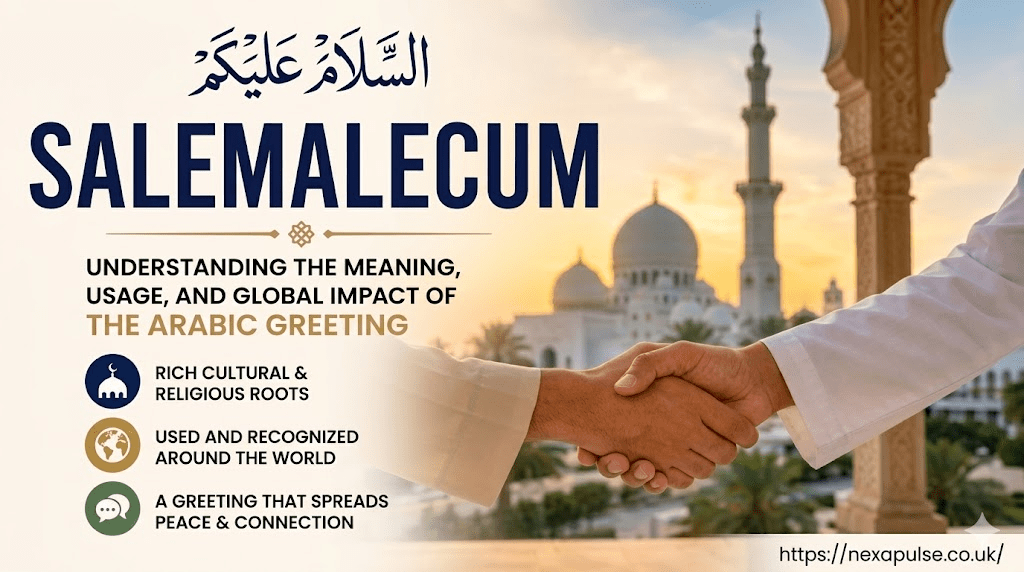
Salamalecum
The word salamalecum is one of the most recognized greetings in the world. It is commonly used by Muslims across different countries and cultures. While many people spell it as salamalecum, the traditional Arabic phrase is As-Salamu Alaikum, which means “Peace be upon you.”
This greeting is much more than a simple hello. It carries a message of kindness, respect, friendship, and goodwill. Whether spoken in homes, workplaces, mosques, schools, or public gatherings, salamalecum helps create positive connections between people.
Over the years, this greeting has spread far beyond Arabic-speaking regions. Today, millions of people use it daily in countries across the Middle East, Africa, Asia, Europe, and North America. Understanding the meaning and importance of salamalecum helps people appreciate its role in promoting peace, respect, and community.
Table of Contents
Salamalecum at a Glance
| Feature | Details |
| Common Spelling | Salamalecum |
| Traditional Arabic | As-Salamu Alaikum |
| Meaning | Peace be upon you |
| Language Origin | Arabic |
| Religious Association | Islam |
| Standard Response | Wa Alaikum Assalam |
| Purpose | Greeting and showing respect |
| Usage | Daily conversations, meetings, gatherings |
| Global Reach | Used by millions worldwide |
| Core Message | Peace, goodwill, and unity |
What Does Salamalecum Mean?
The phrase salamalecum comes from the Arabic expression As-Salamu Alaikum. When translated into English, it means “Peace be upon you.”
The word salam means peace, safety, and well-being. By offering this greeting, a person wishes peace and blessings upon another individual. This simple phrase creates a positive atmosphere and encourages respectful communication.
Unlike many greetings that simply acknowledge someone’s presence, salamalecum carries a meaningful message. It expresses care, respect, and goodwill. This is one reason why it remains one of the most cherished greetings in many cultures around the world.
The Origin of Salamalecum
The roots of salamalecum can be traced back to classical Arabic and early Islamic traditions. The greeting was widely encouraged as a way to spread peace among communities.
Historically, greetings played an important role in strengthening relationships. As Islam spread to different regions, the use of salamalecum traveled with it. Today, the greeting is heard in countries such as Saudi Arabia, Pakistan, Indonesia, Egypt, Turkey, Nigeria, and many others.
Although pronunciation and spelling may vary by region, the message remains the same. The greeting continues to symbolize respect, friendship, and peaceful intentions.
How to Pronounce Salamalecum Correctly
Many people encounter different spellings, including:
- Salamalecum
- Salam Aleikum
- Salam Alaikum
- Assalamu Alaikum
- Salamalaykum
The most accurate pronunciation is:
As-Sa-Laa-Mu A-Lai-Kum
Because Arabic sounds do not always match English spelling, variations are common. Regardless of the spelling used, the meaning remains focused on peace and goodwill.
Learning the correct pronunciation helps people show respect when interacting with Muslim friends, colleagues, or community members.
The Proper Response to Salamalecum
When someone says salamalecum, the traditional response is:
Wa Alaikum Assalam
This means:
“And peace be upon you too.”
The response returns the same blessing and demonstrates mutual respect. In many communities, exchanging these greetings is considered a positive social practice that strengthens relationships.
For example:
Person A: Salamalecum
Person B: Wa Alaikum Assalam
This brief exchange creates a warm and welcoming interaction.
Why Salamalecum Is Important in Islam
In Islamic teachings, greetings are highly valued because they help build stronger communities. Salamalecum is encouraged as a way to spread peace and create positive relationships.
The greeting reflects important values such as:
- Respect
- Kindness
- Humility
- Unity
- Compassion
Many Muslims begin conversations with salamalecum because it establishes a friendly tone and reminds people of the importance of peace in everyday life.
Its continued use demonstrates how a simple phrase can carry deep meaning and cultural significance.
Salamalecum in Different Countries
Although salamalecum originated in Arabic, it is now used worldwide. Different cultures may pronounce it slightly differently.
In Pakistan and India, it is often heard in daily conversations. In Indonesia and Malaysia, it is commonly used during formal and informal interactions. Across the Middle East, the greeting remains a standard way of welcoming others.
Even in Western countries, many Muslim communities continue to use salamalecum as part of their cultural and religious identity.
This global usage highlights the greeting’s universal message of peace.
Salamalecum and Modern Communication
Technology has changed how people communicate, but salamalecum remains popular. It appears frequently in:
- Text messages
- Emails
- Social media posts
- Video calls
- Online communities
Many people start digital conversations with salamalecum to maintain respectful communication even when interacting online.
The greeting’s adaptability demonstrates its lasting relevance in today’s connected world.
Common Misunderstandings About Salamalecum
Some people assume salamalecum is exclusively a religious phrase. While it has strong roots in Islamic tradition, it is also widely used as a cultural greeting.
Others believe the phrase is difficult to learn. In reality, understanding its meaning and response is quite simple.
A few common misconceptions include:
- Only religious leaders use it.
- It cannot be used in casual settings.
- Non-Muslims cannot say it.
In practice, many people appreciate the greeting because of its positive and respectful message.
Benefits of Using Salamalecum
Using salamalecum offers several social benefits:
Promotes Respect
The greeting immediately shows courtesy toward others.
Encourages Peace
The phrase centers around peace, creating a positive interaction.
Strengthens Relationships
Regular use helps build trust and connection among people.
Preserves Cultural Heritage
It keeps important traditions alive across generations.
Creates Positive First Impressions
Beginning conversations with goodwill often leads to better communication.
These benefits explain why the greeting continues to be used by millions worldwide.
Salamalecum in Daily Life
People use salamalecum in many everyday situations:
- Greeting family members
- Meeting friends
- Entering workplaces
- Visiting neighbors
- Attending community events
- Joining online discussions
The greeting fits both formal and informal settings. Its flexibility makes it one of the most practical and meaningful greetings available.
From a personal perspective, hearing salamalecum often creates an immediate sense of warmth and familiarity. Even among strangers, it can help establish a respectful connection.
Cultural Impact of Salamalecum
Salamalecum represents more than language. It reflects values that many communities strive to uphold.
The greeting encourages people to begin interactions peacefully. In diverse societies, such expressions help bridge cultural differences and foster mutual understanding.
As globalization increases cultural exchange, more people are becoming familiar with salamalecum and its positive message. This growing awareness contributes to greater appreciation of different traditions and customs.
Its continued popularity shows how simple words can carry powerful meanings.
Frequently Asked Questions
What does salamalecum mean?
Salamalecum means “Peace be upon you.” It is derived from the Arabic phrase As-Salamu Alaikum.
How do you respond to salamalecum?
The traditional response is “Wa Alaikum Assalam,” which means “And peace be upon you too.”
Is salamalecum an Islamic greeting?
Yes. It is widely associated with Islam, but it is also used culturally in many communities.
Can non-Muslims say salamalecum?
Yes. Anyone can use the greeting respectfully to express goodwill and peace.
Why are there different spellings of salamalecum?
Different languages and transliterations create variations such as Salam Alaikum, Salam Aleikum, and Salamalecum.
Is salamalecum used worldwide?
Yes. Millions of people across Asia, Africa, Europe, the Middle East, and North America use this greeting.
Conclusion
Salamalecum is far more than a simple greeting. It is a meaningful expression of peace, respect, kindness, and community. Rooted in Arabic tradition and embraced by Muslims worldwide, it continues to connect people across cultures and generations.
Whether spoken face-to-face, written in a message, or shared online, salamalecum carries a timeless message that remains relevant today. By understanding its meaning, origin, and proper response, people can better appreciate one of the world’s most recognized greetings.
In a world where positive communication matters more than ever, salamalecum serves as a reminder that every conversation can begin with peace.
About the Author