Dense Fog Advisory
A dense fog advisory is an important weather alert issued to inform the public about significantly reduced visibility due to thick fog. When this advisory is in effect, visibility is typically reduced to one-quarter mile or less over a widespread area. Such conditions can create hazardous travel situations, disrupt transportation systems, and increase the risk of accidents. Understanding what a dense fog advisory means and how to respond can help individuals stay safe and prepared.
Fog is a common meteorological phenomenon that forms when water vapor condenses into tiny liquid water droplets suspended in the air near the Earth’s surface. While fog may seem harmless or even picturesque, dense fog can quickly become dangerous, especially for drivers, pilots, and maritime operators. A dense fog advisory serves as an early warning system, encouraging caution and preventive measures.
What Is a Dense Fog Advisory?
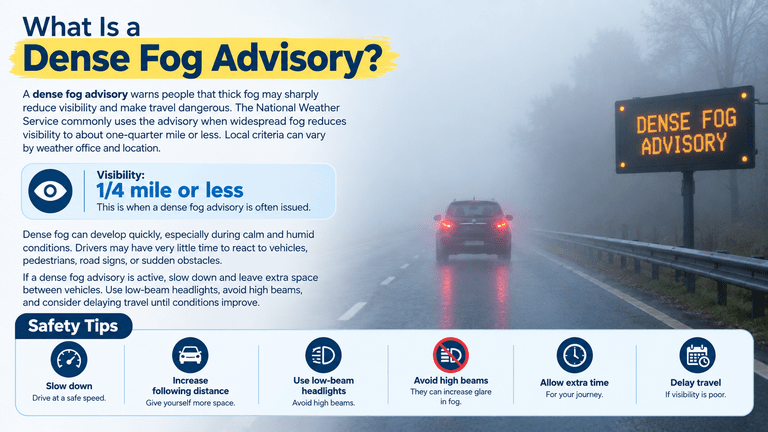
A dense fog advisory is issued by meteorological authorities when widespread fog reduces visibility to one-quarter mile or less. In the United States, advisories are issued by the National Weather Service, which monitors weather conditions and provides alerts to protect life and property.
The advisory does not necessarily mean that travel is impossible, but it does indicate that conditions are hazardous. Drivers may have difficulty seeing other vehicles, road signs, traffic signals, and pedestrians. Airports may experience delays or cancellations, and maritime navigation can become challenging.
Dense fog advisories are typically issued for specific counties or regions and are valid for a certain period. They may be updated, extended, or canceled depending on how weather conditions evolve.
How Dense Fog Forms
Dense fog develops under specific atmospheric conditions. It often forms during the night or early morning hours when temperatures cool and the air near the ground reaches its dew point. When the air becomes saturated, water vapor condenses into tiny droplets, creating fog.
Several types of fog can lead to a dense fog advisory. Radiation fog occurs when the ground loses heat overnight, cooling the air above it. This type is common in valleys and rural areas. Advection fog forms when warm, moist air moves over a cooler surface, such as cold ocean water. Upslope fog develops when moist air is forced up a slope, cooling and condensing as it rises.
Weather patterns associated with high pressure systems often create calm winds and clear skies, ideal conditions for fog formation. In some cases, fog can persist throughout the day if temperatures do not rise enough to disperse it.
Where Dense Fog Advisories Are Common
Dense fog advisories can occur in many parts of the world, but certain regions are more prone to them. Coastal areas frequently experience advection fog due to temperature differences between land and sea. Mountain valleys are susceptible to radiation fog because cooler air settles in low-lying areas.
In the United States, states such as California, Louisiana, Texas, and parts of the Midwest often see dense fog events. For example, coastal communities near the Pacific Ocean frequently encounter thick fog influenced by cold ocean currents. River valleys, including those along the Mississippi River, are also prone to fog formation.
Urban areas can experience dense fog as well, particularly when humidity levels are high and winds are calm. Industrial emissions and pollution can sometimes combine with fog to create smog, further reducing visibility and impacting air quality.
Hazards Associated With Dense Fog
The primary hazard of a dense fog advisory is reduced visibility. When drivers cannot see clearly ahead, the risk of collisions increases. Multi-vehicle pileups are more likely during dense fog events because motorists may not have enough time to react to stopped or slowing traffic.
Pedestrians and cyclists are also at risk, as drivers may have difficulty spotting them. Fog can distort perception of distance and speed, making it challenging to judge how far away another vehicle is.
Air travel can be disrupted as well. Aircraft require adequate visibility for takeoffs and landings. Dense fog can cause flight delays, diversions, or cancellations. Maritime operations may slow down or halt when visibility drops significantly.
Fog can also impact rail transportation. Train operators must reduce speed when visibility is limited, potentially leading to delays in passenger and freight services.
How to Stay Safe During a Dense Fog Advisory
When a dense fog advisory is in effect, taking proper precautions is essential. Drivers should reduce speed and increase following distance. Using low-beam headlights or fog lights can improve visibility. High-beam headlights should be avoided because they reflect off the fog and create glare.
It is important to use windshield wipers and defrosters to maintain clear windows. Drivers should rely on road markings rather than headlights of other vehicles to guide them. If visibility becomes too poor, pulling off the road to a safe location may be the best option.
Pedestrians should wear bright or reflective clothing to increase visibility. Cyclists should use lights and reflectors. Individuals should allow extra travel time and check weather updates before heading out.
Staying informed is critical. Monitoring local weather reports, mobile alerts, or weather apps can help individuals respond promptly to changing conditions.
The Role of Weather Forecasting and Technology
Modern technology plays a vital role in predicting and detecting dense fog. Meteorologists use satellite imagery, weather models, and surface observations to monitor humidity, temperature, and wind patterns. Automated weather stations provide real-time data that help forecasters determine when a dense fog advisory is necessary.
Advancements in forecasting have improved the accuracy of fog predictions, although fog remains one of the more challenging weather phenomena to predict precisely. Small changes in wind speed or temperature can significantly alter fog development and duration.
Roadway sensors and variable message signs are also used in some regions to warn drivers of reduced visibility. These systems can provide real-time updates and reduce the likelihood of accidents.
Economic and Social Impacts of Dense Fog
Dense fog advisories can have economic consequences. Transportation delays can disrupt supply chains, particularly for industries reliant on just-in-time deliveries. Airports experiencing fog-related delays may see financial losses due to canceled flights and stranded passengers.
Agricultural operations can also be affected. Persistent fog may influence crop health, particularly if it contributes to prolonged damp conditions that promote plant diseases.
Schools and businesses may delay opening times when visibility is extremely poor. Emergency services may experience slower response times, impacting community safety.
Despite these challenges, dense fog advisories are crucial tools for minimizing harm. By providing advance notice, authorities help communities prepare and adapt to temporary disruptions.
Climate Change and Fog Patterns
The relationship between climate change and fog is complex. Some studies suggest that warming temperatures may alter fog frequency in certain regions. Changes in sea surface temperatures, humidity patterns, and atmospheric circulation could influence how often dense fog forms.
In some coastal areas, fog frequency has decreased over time, potentially affecting local ecosystems that depend on fog moisture. In other regions, shifts in climate conditions may increase the likelihood of fog events.
Ongoing research continues to explore these trends. Understanding how climate change affects fog patterns can help improve forecasting and preparedness efforts.
Conclusion
A dense fog advisory is more than just a weather alert; it is a critical warning designed to protect lives and property. When visibility drops to one-quarter mile or less, everyday activities such as driving, flying, and shipping can become hazardous. By understanding how fog forms, recognizing the risks, and following safety guidelines, individuals can reduce the likelihood of accidents and disruptions.
Staying informed through reliable weather sources and exercising caution during dense fog events are essential steps in maintaining safety. While fog may be a natural and often beautiful phenomenon, dense fog requires respect and preparedness. Awareness and responsible behavior can make all the difference when visibility fades and uncertainty rises.
Frequently Asked Questions
What triggers a dense fog advisory?
A dense fog advisory is triggered when widespread visibility drops to one-quarter mile or less due to fog. Meteorologists assess weather data, including humidity, temperature, and wind conditions, before issuing the advisory.
How long does a dense fog advisory usually last?
The duration varies depending on weather conditions. Many advisories last a few hours, often during the early morning, but some can persist throughout the day if fog does not dissipate.
Is a dense fog advisory the same as a fog warning?
No, a dense fog advisory indicates hazardous but not extreme conditions. A warning would suggest more severe or life-threatening impacts. Terminology may vary by country or weather agency.
Can flights operate during a dense fog advisory?
Flights can operate if airports meet minimum visibility requirements. However, dense fog often causes delays or cancellations, especially when visibility is extremely limited.
What should I do if I encounter dense fog while driving?
Slow down, use low-beam headlights, increase following distance, and avoid sudden stops. If visibility becomes too poor to continue safely, pull off the road to a secure location and wait for conditions to improve.
About the Author